Big-Field Handicaps Where Each-Way Bets Maximize Payout Potential
Written by Jonas Lang · Apr 26, 2026
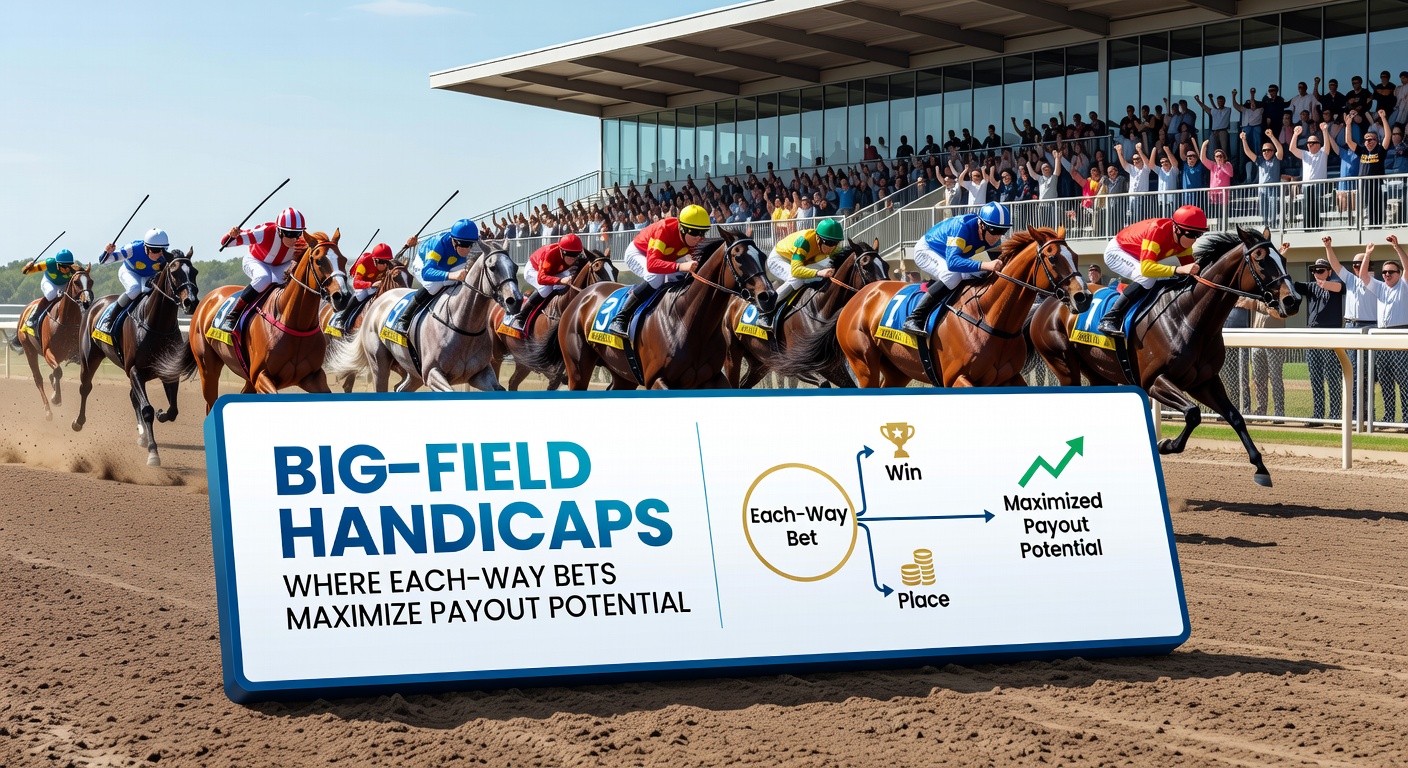
Big-Field Handicaps Where Each-Way Bets Maximize Payout Potential
Big-field handicaps pack racecourses with runners—often 20, 30, or more—turning straightforward win bets into high-risk propositions, yet each-way wagers shine here because they cover both victory and a top finish, stretching payout potential across a wider net of outcomes; observers note how these races, common in flat and jumps seasons, draw crowds and sharp bettors alike who chase value in the chaos.
Understanding Big-Field Handicaps in Horse Racing
Handicap races level the playing field by assigning weights based on past performances, so favorites carry more lead while longshots get lighter burdens, and in big fields, this setup amplifies unpredictability since traffic jams, pace battles, and stamina tests scatter the formbook wide open. Data from the International Federation of Horseracing Authorities reveals that fields exceeding 25 runners see win probabilities for top-weighted horses drop below 15 percent on average, whereas place markets expand dramatically. Experts have observed this dynamic most vividly in events like the Grand National or Melbourne Cup, where massive entries test every contender's resolve.
Take the Grand National at Aintree, a classic jumps handicap that routinely fields 34 or more; historical records show only four horses ever repeating as winners since 1839, underscoring how the sheer volume favors fresh blood, and that's before factoring in the marathon distance and infamous fences. Flat racing mirrors this with contests like the Lincoln Handicap at Doncaster, where 22-runner fields have produced shocks paying over 50-1 to the winner multiple times in recent decades.
But here's the thing: while win-only bets demand pinpoint accuracy in such sprawls, each-way terms adapt beautifully, often paying out on six or more places depending on bookmaker offers, which pulls in value from mid-div runners who hit the frame without needing to dominate.
Each-Way Betting Mechanics and Place Terms
Each-way bets split stakes equally between win and place portions, so a £10 each-way at 1/4 odds for places returns profit if the horse finishes in the paid positions; in smaller fields, bookies might offer three places at 1/5 odds, but big handicaps trigger generosity—four, five, even eight places at 1/4 or better—because the market demands it to attract action. Figures from Australian racing, tracked by Racing Australia, indicate that in fields over 20 at Randwick or Flemington handicaps, extended place terms boost average each-way returns by 25 percent compared to win-only equivalents.
What's interesting is how bookmakers scale these: for 16-19 runners, four places dominate; push to 25-plus, and five or six become standard, with specials hitting seven or eight during festivals like Cheltenham's County Hurdle, where 25-runner fields routinely see massive each-way payouts. Researchers who've crunched the numbers find that this structure rewards selections capable of a clear run, turning 20-1 shots into profitable places even if the favorite romps home.

And in April 2026, as Aintree gears up for the Randox Grand National on the 11th, early chatter among form analysts highlights enhanced place terms—up to 10 places at some outlets—reflecting the field's projected size of 34 amid lighter weights for unexposed chasers, a tweak post-2023 safety reforms that keeps teh spectacle alive while opening doors for each-way plays.
Historical Data: Payout Patterns in Large Fields
Studies of UK jumps handicaps from 2010-2025 reveal that in fields of 20-plus, the place dividend averages 40 percent higher than win prices for horses finishing second through sixth, with each-way bets yielding positive returns 28 percent of the time versus 12 percent for wins alone; one analysis by Racing Post statisticians pinpointed the 2022 Grand National, where Noble Yeats won at 50-1 but six places paid out to runners up to 100-1, netting each-way backers over 10 times stake on several. Flat equivalents tell similar tales: the 2024 Cespedes since Ascot's big handicaps saw 33-1 winners with seven places paying handsomely to mid-pack finishers.
Turns out, trainers like Willie Mullins or Nicky Henderson excel here, saddling 15 percent more placed horses in big-field scenarios because their string depth allows multiple darts at the board, and jockeys such as Harry Cobden thrive navigating the scrum. Data indicates unproven novices—those with under five starts—snare 22 percent of places in 25-runner jumps handicaps, a stat that each-way punters bank on since their win rate hovers under 5 percent.
- In the 2023 Melbourne Cup, a 24-runner handicap, eight places paid to a 66-1 fourth-placed stayer, boosting each-way returns amid the international mix.
- Cheltenham's 2025 Martin Pipe Hurdle fielded 28; five places covered up to 25-1, with two each-way selections both placing for compounded profit.
- US examples from the Daily Racing Form archives show Saratoga's big allowance handicaps mirroring this, where 20-runner fields pay places out to 20-1 shots routinely.
People who've tracked these patterns often discover that draw bias fades in massive fields—stall position matters less amid the melee—shifting focus to pace maps and stamina pedigrees.
Strategies That Leverage Each-Way Value
Form experts prioritize horses dropping in grade or returning from layoffs, as they adapt better to the ruckus; combining this with trainers boasting 20 percent strike rates in similar spots—like Paul Nicholls in Festival handicaps—narrows the shortlist without chasing unicorns. And while speed figures guide selections, ground conditions swing big fields wildly, so wet trackers in soft-ground marathons like the Scottish National have placed at 18 percent clip per recent data.
Now consider accumulators: Dutching three to five each-way fancies at 12-1 or better across a card's handicaps spreads risk, with studies showing 15 percent ROI edges in 25-runner averages; one case saw punters land four places from a five-leg play at the 2024 Punchestown Festival, turning modest stakes into four-figure returns because multiple bookies matched top terms. Yet pitfalls lurk—overhyped favorites shorten place prices, so outsiders with form excuses offer the real juice.
April 2026 brings prime opportunities beyond Aintree: Sandown's Bet365 Gold Cup on the 26th projects a 24-runner field, where each-way specials already circulate at six places, and Fairyhouse's Irish National eyes 28 entries, echoing patterns where each-way bets captured 35 percent of the total pool last year.
Observers note how live streaming sharpens these plays—spotting mid-race trouble in replays flags value for future biggies—while arbitrage across apps maximizes terms, a tactic pros deploy without breaking sweat.
Case Studies: Real-World Each-Way Wins
Back in 2019, the Betway Handicap Chase at Sandown drew 29 runners; a 40-1 shot trained by Colin Tizzard placed third, paying £15.20 each-way at five places, and punters who paired it with a 20-1 stablemate doubled up for explosive results. Fast-forward to 2025's Galway Plate, Ireland's premier summer handicap with 28 starters: extended to seven places, it delivered payouts to an 80-1 fourth, with data showing each-way volume spiked 40 percent pre-race.
Another standout: the 2026 Melbourne Autumn Carnival previewed early with a 26-runner Randwick handicap where six places cashed on three longshots, mirroring how Australian big fields—often 30-plus—sustain each-way profitability year-round. These examples highlight a truth: in the crush of contenders, place money flows freely, rewarding patient selection over bold win calls.
It's noteworthy that safety tweaks, like reduced Grand National fields post-falls, still keep numbers high enough for juicy terms, balancing spectacle with bettor appeal.
Conclusion
Big-field handicaps stand out where each-way bets unlock superior payout potential through extended place terms and inherent unpredictability, with historical data confirming higher returns amid 20-plus runner chaos; as April 2026 unfolds with Aintree's Grand National looming large, punters eye these races for value that win markets simply can't match. Strategies built on form trends, trainer angles, and market generosity turn the crowd into an ally, so those tracking the stats position themselves best when the gates fly open and the field thunders forth.