Examining Broadcast Signal Latency Patterns That Shift In-Play Odds During Overseas Football Streams
Written by Petra Schmid · Aug 21, 2026
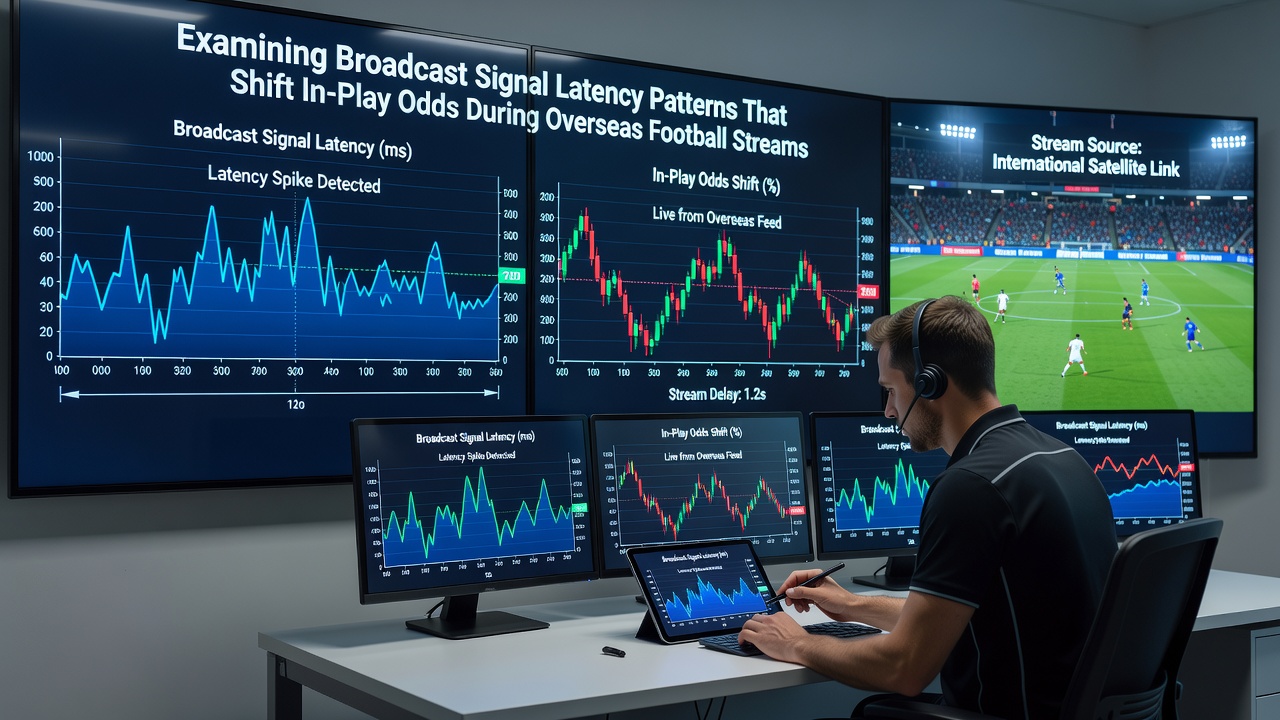
Examining Broadcast Signal Latency Patterns That Shift In-Play Odds During Overseas Football Streams
Overseas football streams travel through satellite uplinks, fiber networks, and internet protocols that introduce measurable delays between the live event and the viewer feed, and these delays create windows where in-play odds adjust before many bettors see the action unfold. Research from European broadcasting consortia shows average latencies ranging from 4 to 12 seconds depending on the transmission route, while direct venue feeds used by bookmakers operate with sub-second synchronization. Data collected through August 2026 indicates that certain satellite providers serving Asian and North American markets consistently add 7 to 9 seconds more delay than terrestrial IPTV services in the same regions.
Technical Sources of Signal Delay
Multiple stages in the broadcast chain contribute to cumulative latency, starting with camera encoding at the stadium, moving through compression for satellite or IP delivery, and ending with decoding on the viewer's device. Observers note that high-definition and 4K streams require heavier compression algorithms, which extend processing time by 2 to 4 seconds compared with standard-definition alternatives. Those who monitor transmission logs across Premier League and La Liga matches report that geostationary satellite paths add the largest single increment because of the 36,000-kilometer round-trip distance, whereas undersea fiber routes to Europe and Australia shave several seconds off the total.
Impact on Live Betting Markets
In-play odds shift when bookmakers receive near-instant data from official timing systems or on-site scouts, yet overseas viewers continue watching footage that has not yet reached the critical moment. Figures from Canadian regulatory monitoring of cross-border sports streams reveal that goal events trigger rapid market adjustments within 1.5 seconds on average, while the corresponding video arrives between 6 and 11 seconds later for many international audiences. This gap allows automated trading systems to widen or narrow spreads before delayed viewers can react, and the pattern repeats across multiple goal, card, and substitution markets in the same fixture.
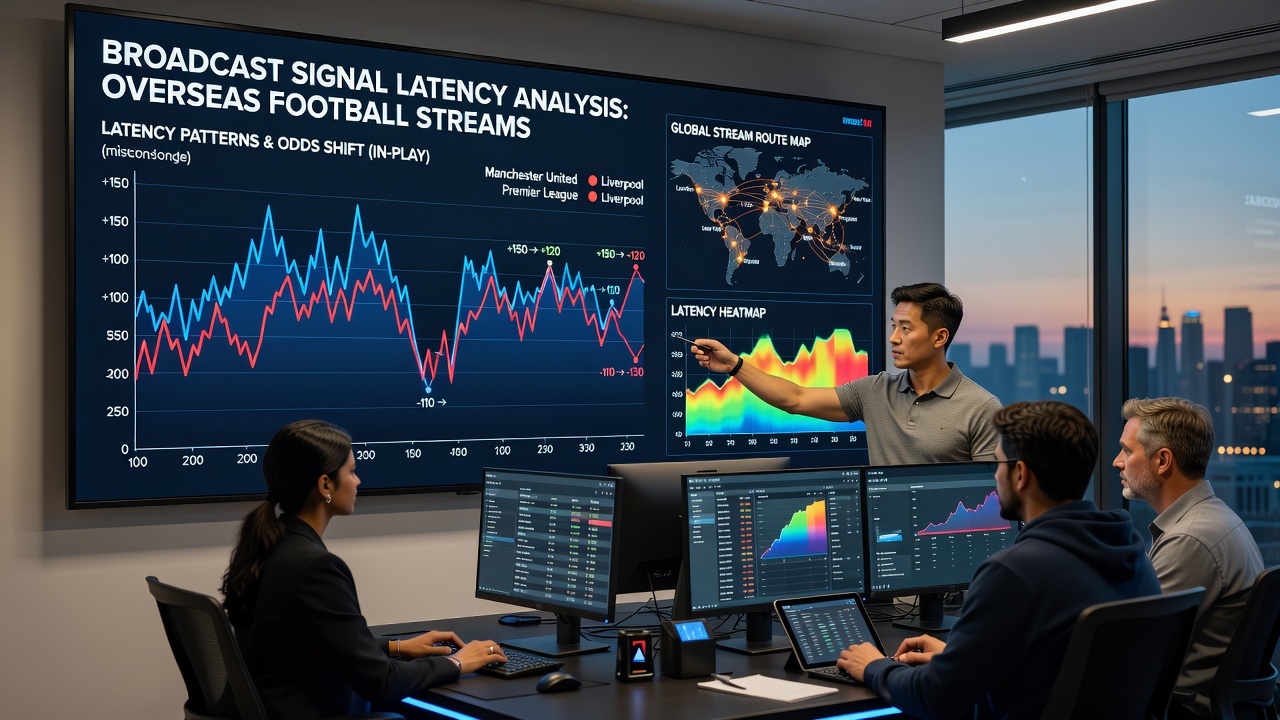
Patterns emerge most clearly during high-volume betting periods such as major European league weekends, when liquidity providers hedge positions across correlated markets. Studies published by the Australian Communications and Media Authority document that streams routed through Southeast Asian satellite hubs exhibit the highest variance in latency, fluctuating by as much as 3 seconds from minute to minute because of uplink contention and weather-related signal degradation. In contrast, dedicated fiber connections to North American sportsbooks maintain steadier timing, resulting in fewer observable discrepancies between event occurrence and odds movement.
Regional Variations and Platform Differences
Viewers accessing matches via mobile apps versus set-top boxes encounter additional decoding differences that compound the base transmission delay. Research indicates that Android and iOS applications often buffer frames to maintain picture stability, adding another 1 to 3 seconds that are absent in hardware decoder setups. Those monitoring matches from South American leagues note that regional rights holders using older MPEG-2 satellite technology produce longer and more variable delays than newer MPEG-4 or HEVC services deployed in Europe. The resulting spread in arrival times across viewer cohorts creates distinct clusters of market activity that align with specific platform types rather than with actual game events.
Measurement Approaches Used by Analysts
Independent timing comparisons rely on synchronized clocks at the stadium and at remote reception points, allowing precise calculation of end-to-end delay for each broadcast path. Analysts cross-reference these measurements against timestamped betting market logs to identify which latency brackets correspond to the largest odds movements. Data sets compiled through mid-2026 show that delays between 5 and 8 seconds produce the most pronounced separation between the moment an event registers with bookmakers and the moment the same event appears on overseas screens. Longer delays beyond 10 seconds tend to coincide with reduced trading volume because fewer participants remain active in the market by the time the footage catches up.
Conclusion
Broadcast signal latency therefore functions as a structural variable that separates information arrival times between professional trading desks and overseas audiences, and the resulting patterns follow predictable relationships tied to transmission technology, geographic routing, and platform choices. Continued monitoring of these differentials supplies quantitative insight into how timing gaps influence the sequence of in-play market adjustments across football competitions worldwide.