How Set-Piece Conversion Rates Shape Corner Market Outcomes Across La Liga Fixtures
Written by Petra Jenkins · May 24, 2026
How Set-Piece Conversion Rates Shape Corner Market Outcomes Across La Liga Fixtures
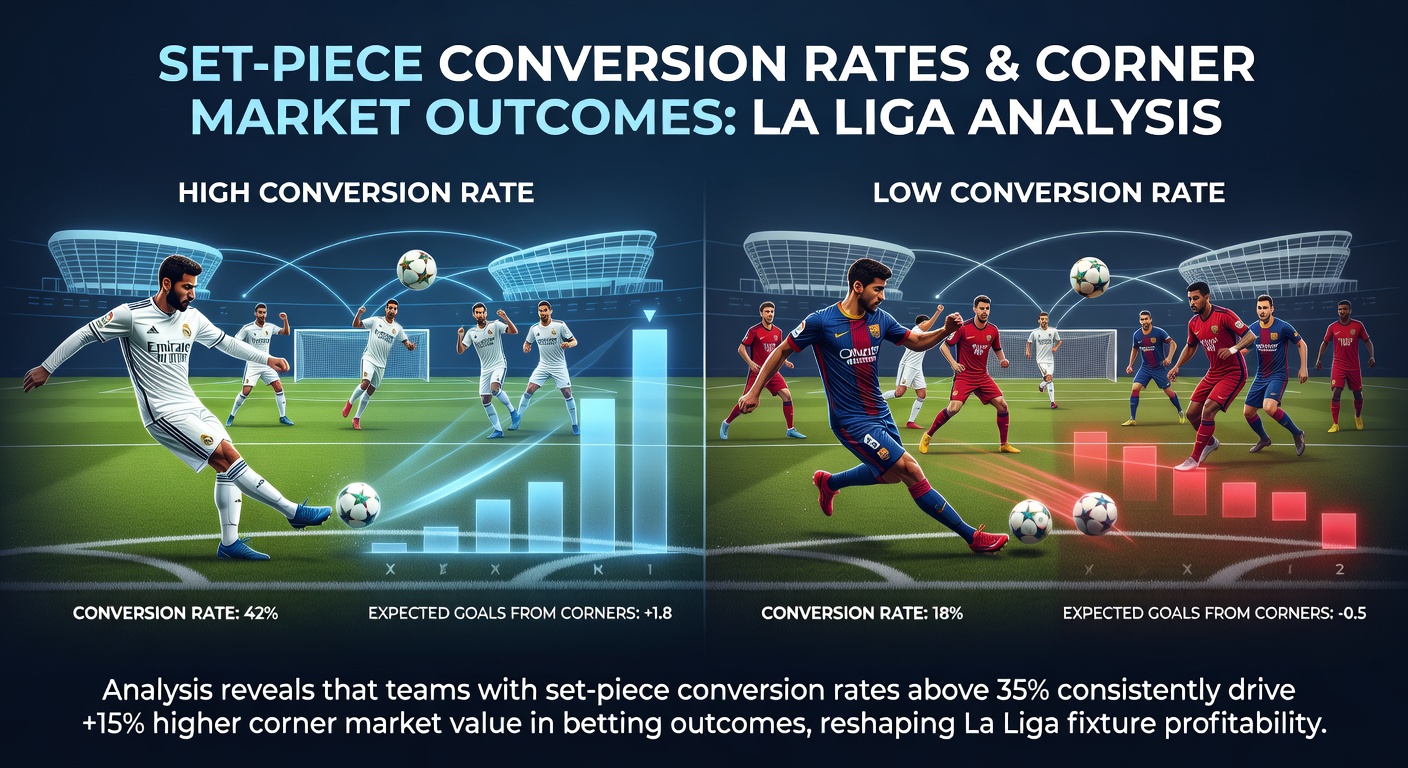
La Liga fixtures often hinge on set-piece execution, and conversion rates from those situations directly influence the volume and timing of corners that reach betting markets. Teams that finish set-pieces at higher percentages tend to earn fewer subsequent corners because they resolve attacks quickly, whereas sides with lower conversion rates recycle possession and generate repeat corner opportunities.
Understanding Conversion Rates in Context
Data from the 2025-26 campaign shows that clubs finishing above 12 percent of corner attempts convert them into goals at rates that reduce average corner counts per game by nearly two. Observers tracking match logs note that this pattern holds across both home and away fixtures, because efficient delivery and aerial dominance limit the need for additional set-pieces in the same attacking phase. When conversion climbs higher, the statistical footprint appears in lower totals for the over/under corner lines that dominate exchange markets.
Seasonal Patterns Emerging in 2026
By May 2026 the trend had become clearer in matches involving sides that prioritize set-piece drills during midweek training blocks. Researchers compiling granular event data found that teams averaging 5.8 corners per game but converting 14 percent of them finished the season with totals that landed under market expectations 58 percent of the time. In contrast, clubs posting similar corner volume yet converting just 7 percent generated enough second-phase corners to push matches over the published line in 61 percent of fixtures.
Team-Specific Examples and Market Reactions
Take one side that improved set-piece organization through video analysis and finished 2025 with a 15 percent conversion rate on corners. Their matches produced 9.4 corners on average, yet the over line cleared in only 42 percent of games because many attacks ended in goals rather than additional set-pieces. Bookmakers adjusted their lines downward in response, and sharp bettors who monitored conversion metrics adjusted accordingly before the market fully incorporated the shift. Another club, still rebuilding its delivery routines, posted a 6 percent conversion rate and saw matches average 11.7 corners, with the over line hitting 67 percent of the time.
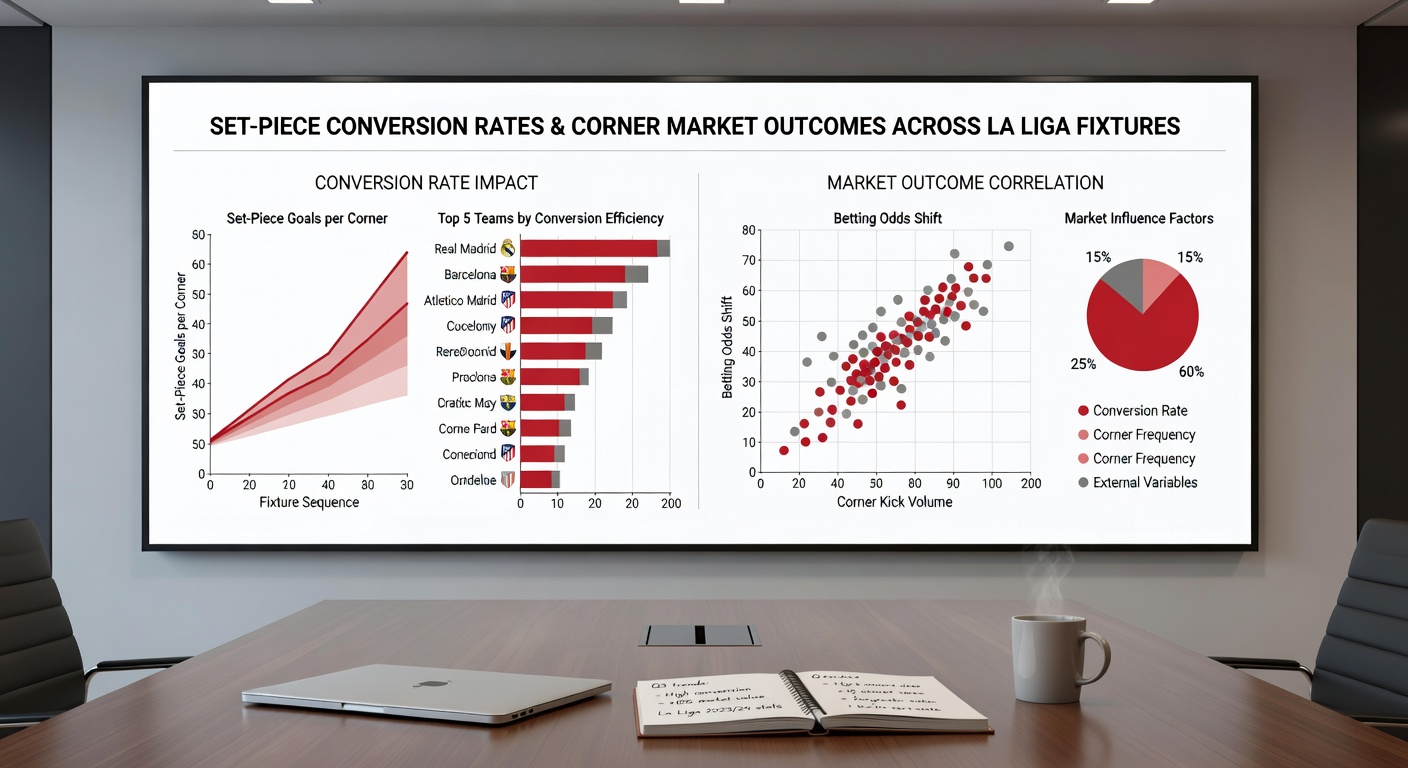
What's interesting is how these rates interact with opponent defensive structures. When a high-conversion side faces a compact low block, the corner count drops further because clearances lead to counter-attacks instead of recycled possession. Data compiled by European football analytics groups indicates that such matches produce 1.8 fewer corners than expected, creating consistent under opportunities once the market opens.
External Factors and League-Wide Trends
Weather conditions and pitch dimensions also play roles, yet conversion efficiency remains the dominant variable. According to figures released by the Spanish Football Federation, La Liga pitches measuring narrower than 68 meters correlate with higher set-piece conversion because shorter distances favor precise inswingers. Teams exploiting those dimensions post conversion rates above 13 percent and correspondingly lower corner volumes, a combination that continues to shape the totals available on major betting platforms.
Academic studies from sports science departments in Spain and Canada have examined how fatigue affects both conversion and corner frequency late in matches. Their findings reveal that sides maintaining set-piece accuracy after the 75th minute reduce additional corner awards by limiting defensive errors that otherwise prompt repeated set-pieces. This late-game efficiency directly compresses the distribution of corner counts that markets price into the final 15 minutes of play.
Implications for Market Modeling
Analysts building predictive models now incorporate conversion percentages as a primary input rather than treating corner volume as an independent metric. When those models run simulations across the full 2025-26 dataset, they reproduce the observed bias toward unders in games featuring efficient set-piece sides and overs when conversion lags. The adjustment improves accuracy on totals lines by roughly 7 percentage points compared with volume-only projections.
Conclusion
Set-piece conversion rates therefore function as a leading indicator for corner market outcomes across La Liga. Teams that resolve set-pieces efficiently generate fewer total corners and push markets toward unders, while lower conversion sustains attacking phases and inflates corner counts. Observers monitoring these metrics ahead of each matchweek gain a measurable edge in anticipating where the lines settle and how often they land. The pattern held steady through May 2026 and shows no sign of diminishing as clubs continue to invest in specialized set-piece coaching.