Linking Broadcast Delay Variations to Live In-Play Tennis Betting Adjustments Across Grand Slam Events
Written by Felix Fischer · Aug 21, 2026

Linking Broadcast Delay Variations to Live In-Play Tennis Betting Adjustments Across Grand Slam Events
Grand Slam tournaments transmit matches through multiple broadcast channels where signal transmission times differ by venue, production setup, and distribution method, and these differences directly influence how live betting platforms recalibrate odds during play. Observers note that streaming services often introduce lags ranging from two to eight seconds compared with traditional satellite feeds, while certain over-the-air broadcasts maintain closer synchronization with on-court action. Researchers tracking these patterns across events have documented consistent variations tied to each tournament's infrastructure choices and regional broadcast partners.
Technical Sources of Delay in Grand Slam Coverage
Production teams at major tournaments route camera signals through encoding, compression, and distribution stages that accumulate measurable latency before reaching viewers and, by extension, data providers feeding betting systems. Studies of Australian Open transmissions reveal that digital streaming platforms add an average 4.7-second delay relative to venue timing, whereas certain European satellite providers compress that gap to under three seconds. Similar measurements at Wimbledon and the US Open show comparable spreads, with clay-court events at Roland Garros producing slightly longer processing chains due to additional graphics layers for ball-tracking visualizations.
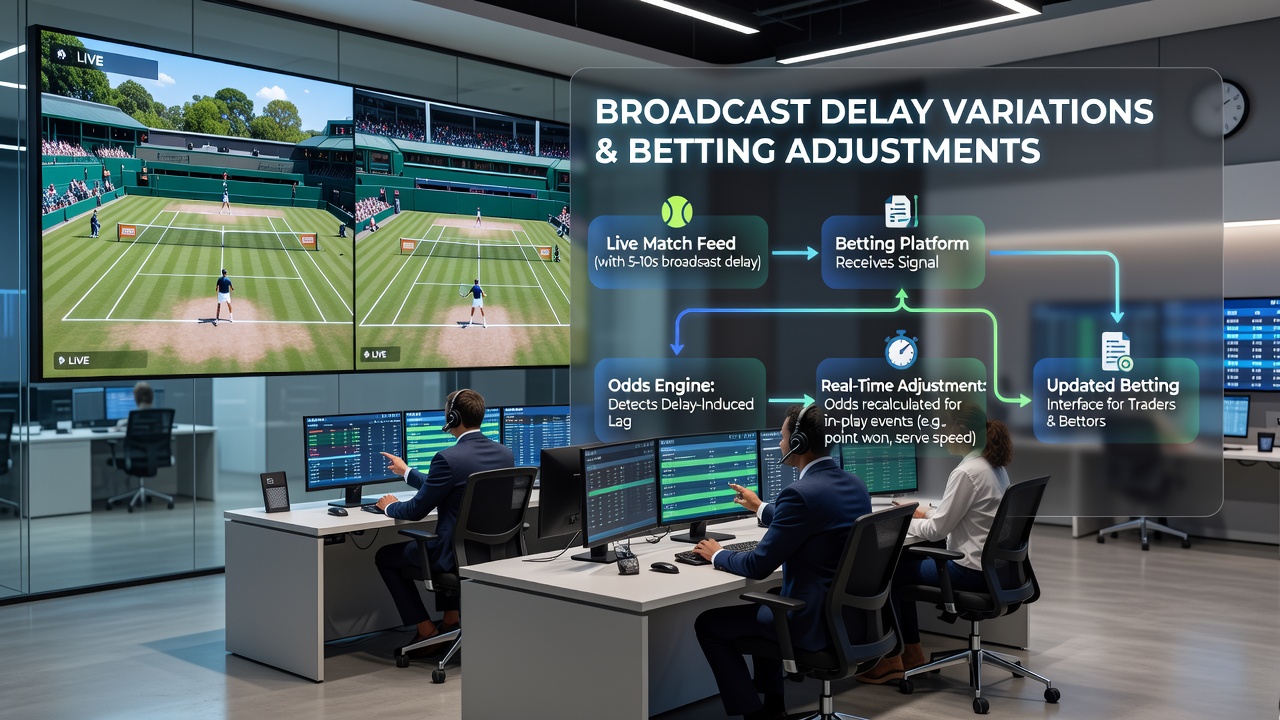
These timing offsets matter because in-play betting engines rely on rapid updates from point outcomes, player movement data, and score changes. When a server delivers a feed that trails court time by several seconds, automated systems and human traders adjust odds using slightly outdated information, creating brief windows where market prices diverge from actual match state. Data collected during the 2025 season indicates that such divergences occur most frequently on serve-dominated points where outcomes resolve in under four seconds.
How Betting Platforms Respond to Transmission Lags
Operators integrate multiple synchronized feeds and apply algorithmic buffers that account for known delay ranges at each Grand Slam venue. One approach involves cross-referencing raw point data from official scoring systems with delayed video inputs, allowing platforms to flag and correct mismatches before odds are published. Figures from industry monitoring services show that leading operators now recalibrate in-play tennis markets within 1.2 seconds of receiving verified score updates, a response time achieved through dedicated low-latency data pipelines separate from consumer broadcasts.
Adjustments become more pronounced during high-stakes moments such as tiebreaks or deciding sets, where rapid point sequences amplify the effect of even modest transmission differences. Platforms handling large volumes of wagers on these matches have implemented dynamic weighting that reduces stake limits on markets most sensitive to timing discrepancies, particularly when multiple Grand Slam events run concurrently.
Patterns Observed Across Different Tournaments
Each Grand Slam presents distinct broadcast characteristics that correlate with measurable betting adjustment frequencies. Hard-court events in Australia and New York tend to feature higher volumes of streaming viewers, correlating with wider delay spreads and more frequent mid-point odds revisions. Grass-court play at Wimbledon produces shorter average rallies, which in turn compresses the window during which delayed feeds can create pricing anomalies. Clay-court matches extend rally lengths, giving platforms additional time to reconcile data sources before the next point begins.
Analysis of match logs from the 2024 and 2025 seasons demonstrates that delay-related adjustments cluster around service breaks and set conclusions. During these periods, operators widen spreads temporarily or suspend markets for one to three points to allow verification across feeds. External data from sports analytics providers confirms these interventions occur at predictable intervals tied to each tournament's production schedule rather than random variation.
Developments Expected in August 2026
The US Open in August 2026 will incorporate expanded 8K broadcast trials alongside existing HD and 4K streams, introducing new variables into delay calculations. Early testing at other multi-court events suggests that higher-resolution encoding can add up to two additional seconds of processing time on certain distribution paths. Betting operators have already begun mapping these projected increases against existing adjustment protocols to maintain market stability across the two-week event.
Regulatory filings from North American gaming authorities indicate that platforms must document latency mitigation procedures when offering in-play markets on major tennis events. These requirements encourage continued investment in independent scoring verification systems that operate independently of consumer video feeds, reducing reliance on any single broadcast source.
Conclusion
Broadcast delay variations across Grand Slam events create measurable effects on the timing and frequency of live betting adjustments, with platforms responding through dedicated data pipelines, algorithmic buffers, and temporary market controls. Data gathered from recent tournaments shows that these mechanisms keep discrepancies within narrow bounds even as transmission technologies evolve. Continued monitoring of infrastructure changes, including those planned for the 2026 US Open, will determine how adjustment protocols adapt to new broadcast formats while preserving market integrity.