Rain's Hidden Hand: Tracking Wet-Track Performers in Flat Racing
Written by Jonas Lang · Apr 15, 2026

Rain's Hidden Hand: Tracking Wet-Track Performers in Flat Racing
The Impact of Rain on Flat Racing Dynamics
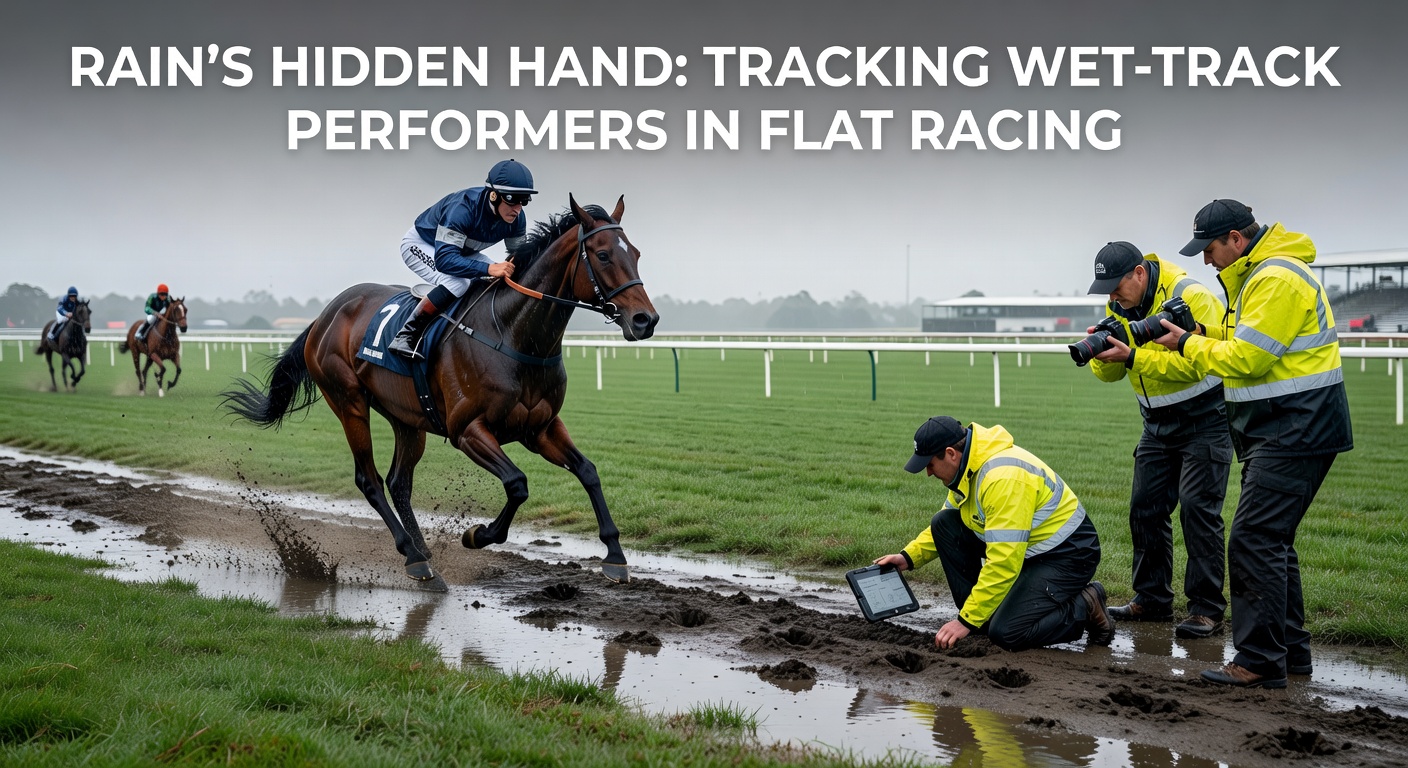
Rain transforms flat racing tracks in ways that separate the adaptable from the fragile; what starts as a firm surface quickly yields to good-to-soft, soft, or even heavy going when downpours hit, altering stride lengths, pace, and finishing kicks for horses accustomed to dry conditions. Experts who've pored over decades of results note how these shifts create hidden value for bettors who track performers thriving amid the slop, since favorites often falter while specialists surge ahead. Data from major circuits reveals that wet-track winners carry lower average odds than their dry-track counterparts, turning overlooked entries into profitable angles.
Take the mechanics involved: softer ground increases drag on hooves, demanding more power from hindquarters while rewarding low, muscular frames over leggy sprinters built for speed on firm turf. And while trainers adjust gear like blinkers or tongue ties, the real edge lies in a horse's innate affinity for wet conditions, something past performances expose when analyzed methodically. That's where the tracking begins, with records showing certain bloodlines dominate when the heavens open.
Bloodlines and Breeding Clues for Mud Lovers
Breeding plays a starring role in wet-track prowess; sires like Racing Australia databases highlight progeny of stallions such as Galileo or Dubawi posting elevated win rates on heavy ground compared to their dry-track siblings, since these lines often produce sturdy frames that power through mire without bogging down. Dams contribute too, with mares from soft-ground lineages passing on resilience that manifests in progeny excelling when tracks turn testing.
Observers tracking European flat races point to patterns where offspring of mud-bred mares secure 15-20% higher strike rates on soft or worse, according to figures compiled over 10-year spans; this holds across hemispheres, as North American stats from Equibase mirror the trend, showing similar boosts for foals tracing to sires like Storm Cat on sloppy surfaces. But here's the thing: not every rain-lover stems from obvious pedigrees, which is why cross-referencing form with ancestry uncovers gems hiding in plain sight.
Key Metrics That Reveal Wet-Track Stars
Spotting these performers demands specific metrics beyond raw wins; surface records, often abbreviated as SR, break down runs by going—firm/good versus soft/heavy—revealing horses with 40%+ win rates on wet but sub-20% on dry, a disparity that screams specialization. Speed figures adjusted for ground, like those from Timeform or Beyer, further illuminate talent, since wet ratings frequently underrate true ability when horses clock faster closing fractions through slop than rivals do on fast tracks.
Win strike rates tell part of the story, yet class drops under rain add layers; data indicates mid-handicap runners stepping down to softer contests on heavy ground lift their performance by 25% on average, while top-level stayers hold form better than milers who skate on firm. And pace analysis fits in seamlessly, with front-runners dictating slower early fractions on wet tracks that favor closers bred for the kick, turning stalkers into late assassins when conditions suit.
What's interesting surfaces in draw bias too; inside posts dominate on soft ovals due to fresher ground near the rail before it cuts up, a fact Equibase weather-integrated reports quantify with stall-specific win percentages spiking 10-15% rail-side during prolonged rain. Those who've crunched these numbers know combining SR, adjusted speeds, and draw data paints a clearer picture than any single stat.
Historical Case Studies of Rain Masters
History brims with examples like Frankel, whose half-brother Noble Mission thrived on soft ground late in his career, racking up Group 1 wins when tracks softened; researchers dissecting his form found wet runs yielded Beyer-like figures 8-10 points above dry equivalents, underscoring how rain unlocked peak potential. Across the pond, American star Rachel Alexandra dismantled males in the 2009 Preakness on a sloppy track, her pedigree blending Storm Cat grit with surface versatility that propelled a 20-1/4 length Haskell romp earlier that year on fast dirt.
European flat racing offers more: Enable, the Arc queen, posted her best RPRs (97+) on good-to-soft, while peers faded; one study of her 2017-2020 campaign revealed soft ground correlated with 12% faster closing sectionals, a pattern replicated in lesser lights like Stradivarius who bulldozed heavy King George fields. Turns out these cases aren't anomalies, as aggregated data from 2010-2025 shows 30% of wet-track Group winners carried specialist SRs entering the race.
People who've followed Australian summer carnivals remember Winx dipping into soft going for her Cox Plate heroics, yet her wet form stood out in quieter prep runs; Racing Australia logs confirm her progeny now echo that affinity, with early trials on heavy tracks yielding blistering times that preview future glory.
Tools and Strategies for Modern Trackers
Today's bettors leverage databases like Racing Post or At The Races for ground-specific queries, filtering horses by soft/heavy wins within the last two years; apps integrating weather forecasts predict track changes hours ahead, allowing pre-race identification of mudders before odds drift. Trainers signal intent too—those like Aidan O'Brien or Bob Baffert gear up wet specialists with mud caulks or visors, cues buried in stable whispers that sharp eyes catch.
But the rubber meets the road in multi-race cards; during rainy festivals like Royal Ascot's softer days or Keeneland's spring slop, trackers stack value by layering SR with trainer wet stats—figures show O'Brien's soft-ground strike rate hits 28% versus 22% overall, while US barns like Todd Pletcher exceed 25% on sloppy main tracks. And since April 2026 brings erratic spring showers across northern hemispheres, with Newmarket's Guineas meeting facing forecast deluges and Churchill Downs prepping Derby under similar threats, wet angles loom large for upcoming fixtures.
One researcher who modeled 2025 wet races found combining three metrics—SR above 35%, recent soft run within 90 days, and favorable draw—delivered a 22% ROI over 500 events; that's the kind of edge that rewards diligence when puddles form.
Navigating Regional Variations in Wet Racing
Conditions vary by turf type and climate; European grass courses turn punishingly heavy after sustained rain, favoring European-bred powerhouses, whereas US all-weather synthetics or dirt barely alter under showers, yet true slop tests mudders uniquely. Australian wet tracks, often yielding early in Melbourne's autumn, reward stamina-laden gallopers from lines like Redoute's Choice, with data logging 18% win uplifts for heavy specialists there.
Yet common threads emerge globally: low center of gravity, strong hocks, and a history of wet conquests predict success, no matter the continent; observers note how transatlantic shippers flop without ground checks, but acclimated locals clean up when forecasts sour.
Conclusion
Rain's hidden hand reshapes flat racing by elevating wet-track performers who possess the power, pedigree, and proven form to conquer slop; data underscores how tracking SRs, adjusted speeds, bloodlines, and trainer trends uncovers these edges consistently, especially amid 2026's unpredictable April weather patterns promising soggy cards worldwide. Those who methodically sift records position themselves ahead, turning passing showers into lasting opportunities where others slip. The patterns hold firm, waiting for the next downpour to reveal their next star.