Synthetic Surface Quirks That Tilt Handicap Calculations in Winter Flat Racing Circuits
Written by Petra Schmid · Jul 31, 2026
Synthetic Surface Quirks That Tilt Handicap Calculations in Winter Flat Racing Circuits
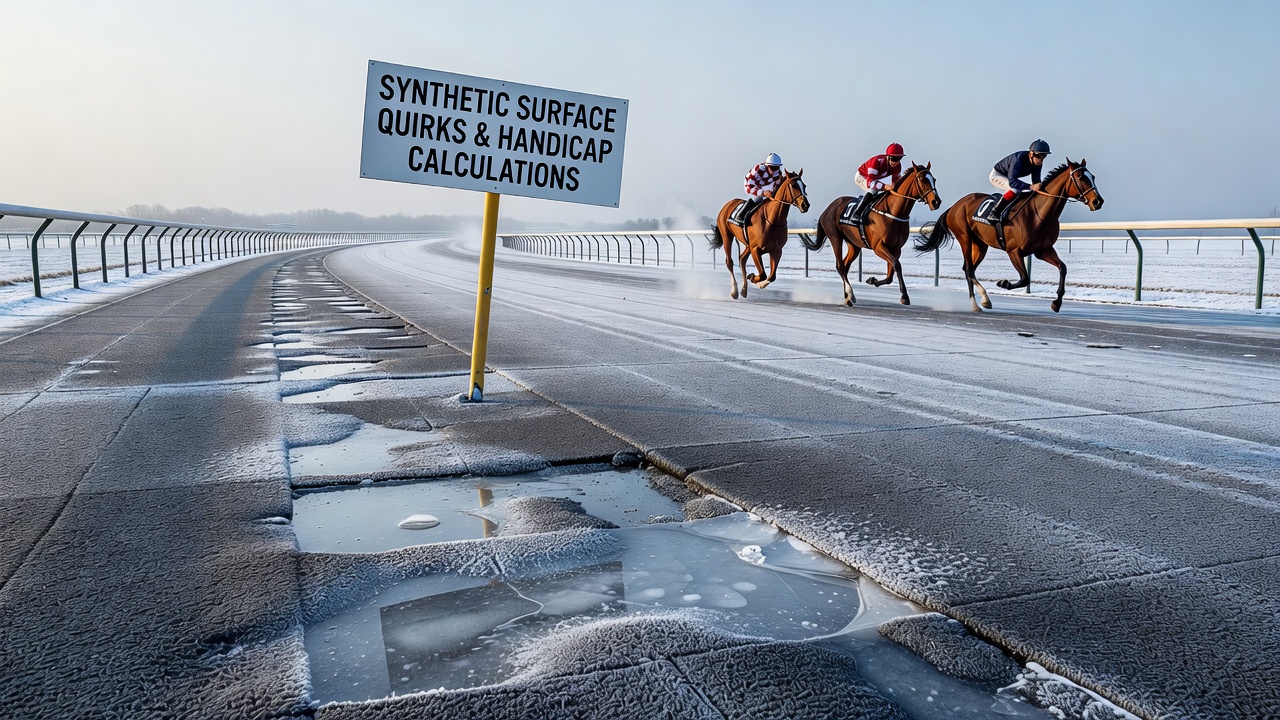
Winter flat racing circuits rely heavily on synthetic surfaces such as Polytrack and Tapeta because these materials maintain consistent footing when turf courses become unplayable, and the surfaces introduce specific performance variables that alter how official handicappers compile ratings. Data compiled across multiple jurisdictions shows that horses which excel on synthetic tracks during December through February often carry inflated marks into spring turf campaigns, while others find their abilities under-rated because early-season synthetic form receives inconsistent weighting in calculation models.
Core Characteristics of Synthetic Materials in Cold Weather
Synthetic tracks contain wax-coated fibers and rubber particles that respond to temperature drops in ways turf does not, and researchers at the University of Melbourne Equine Centre have documented that wax viscosity increases noticeably below 5°C, which reduces kickback yet increases stride compression. Handicappers therefore examine sectional times from winter meetings with greater scrutiny because raw clockings can mask true ability when surface rebound changes. Observers note that trainers adjust shoeing patterns for these conditions, and those adjustments further complicate direct comparisons between synthetic outings and subsequent turf efforts.
Performance Data Patterns Across Circuits
Statistics gathered from North American and Australian winter programs reveal that horses returning from synthetic sprints post higher average speed figures than equivalent turf races, yet the same animals frequently fail to replicate those margins when switched back to grass. This discrepancy arises because synthetic surfaces provide more uniform cushioning, which reduces the energy cost of acceleration out of the gate. Handicap panels in several regions now apply surface-specific multipliers to raw ratings, although the precise formulas differ between jurisdictions and create opportunities for sharp observers to identify mispriced runners. One study released in July 2026 by the North American Jockey Club examined 1,800 winter synthetic starts and found that horses with two or more synthetic victories carried an average of 3.2 pounds more than their turf ratings suggested, while animals with mixed records showed smaller adjustments.
Drainage and Moisture Interaction Effects
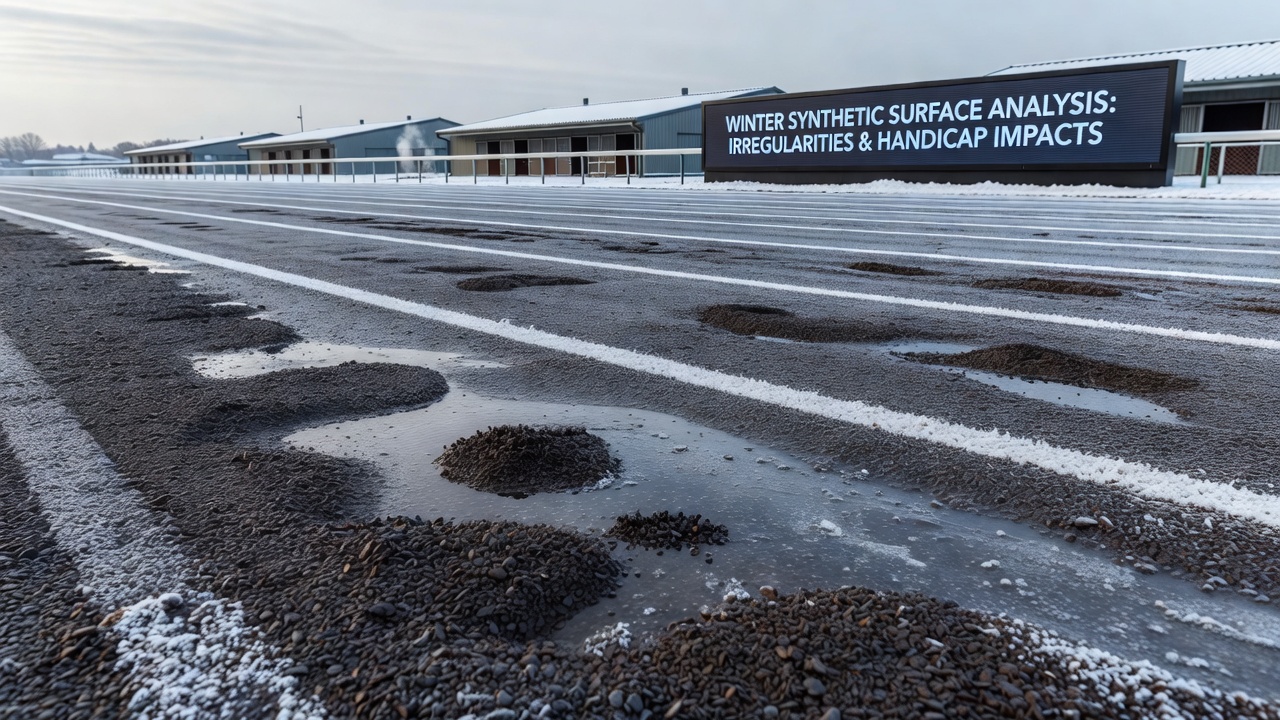
Although synthetic tracks drain rapidly, residual moisture trapped within the wax matrix after heavy rainfall alters grip levels in subsequent days, and this variability affects stride length measurements that feed into official ratings. Handicappers receive daily track reports that include penetrometer readings, yet those figures sometimes lag behind actual changes in surface density. Consequently, horses that run on freshly watered synthetics often record slower times that do not reflect their true capacity, and those slower times later produce lighter handicap weights than the animal merits. Racing authorities in Canada and parts of Europe have begun publishing moisture-content graphs alongside traditional going descriptions to reduce such distortions.
Case Examples from Recent Circuits
Take a three-year-old colt that recorded three consecutive synthetic wins at a major winter venue in early 2025, and the official handicapper raised its mark by 12 pounds based on those victories alone. When the same horse returned to turf in April, its performance dropped sharply because the synthetic victories had occurred on a firmer, colder surface that rewarded early speed more than stamina. Similar patterns appear in longer-distance events where synthetic tracks maintain even tempos throughout, whereas turf races often feature more tactical variation that changes the relative value of form lines. Handicappers have responded by cross-referencing synthetic results against video analysis of sectional splits rather than relying solely on finishing margins.
Adjustments in Rating Methodologies
Rating organizations now incorporate surface-type coefficients into their algorithms, and these coefficients receive periodic recalibration after each winter season concludes. The process involves comparing horses that competed on both surfaces within short time frames, and the resulting data sets help isolate surface-specific contributions to performance. Because winter circuits attract different horse populations than summer turf meetings, sample sizes for reliable cross-surface comparisons remain limited, which leaves room for rating drift. Several European racing federations have therefore introduced voluntary trainer-submitted surface-preference declarations that supplement traditional performance data.
Future Developments in Tracking Technology
Emerging sensor technologies embedded in training gallops allow more precise measurement of stride forces on synthetic materials, and these measurements feed into predictive models that handicappers may adopt within the next two seasons. Such tools could reduce subjectivity in weight assignments by quantifying exactly how much energy a horse expends on a given day. Racing bodies continue to monitor these innovations while maintaining the core principle that handicap marks must reflect overall ability rather than surface-specific peaks.
Conclusion
Synthetic surface quirks continue to shape handicap calculations across winter flat racing circuits because temperature, moisture retention, and material composition alter performance data in measurable ways. Authorities respond with evolving methodologies that blend traditional form analysis and newer measurement techniques, yet discrepancies persist when horses transition between surfaces. Those who study winter results closely recognize that accurate handicap interpretation requires attention to these surface-specific factors rather than blanket application of raw figures.