The Influence of Crowd Support Variations on Scoring Trends in Basketball Playoff Series
Written by Petra Schmid · Jul 3, 2026
The Influence of Crowd Support Variations on Scoring Trends in Basketball Playoff Series
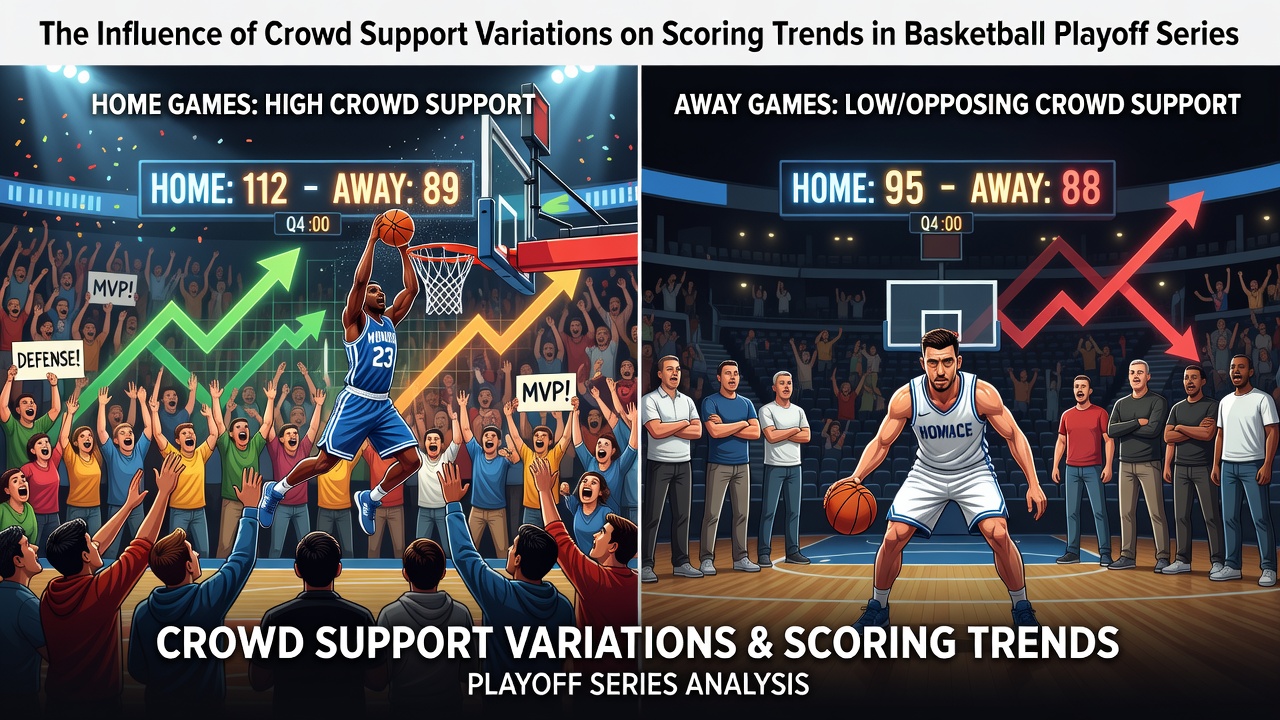
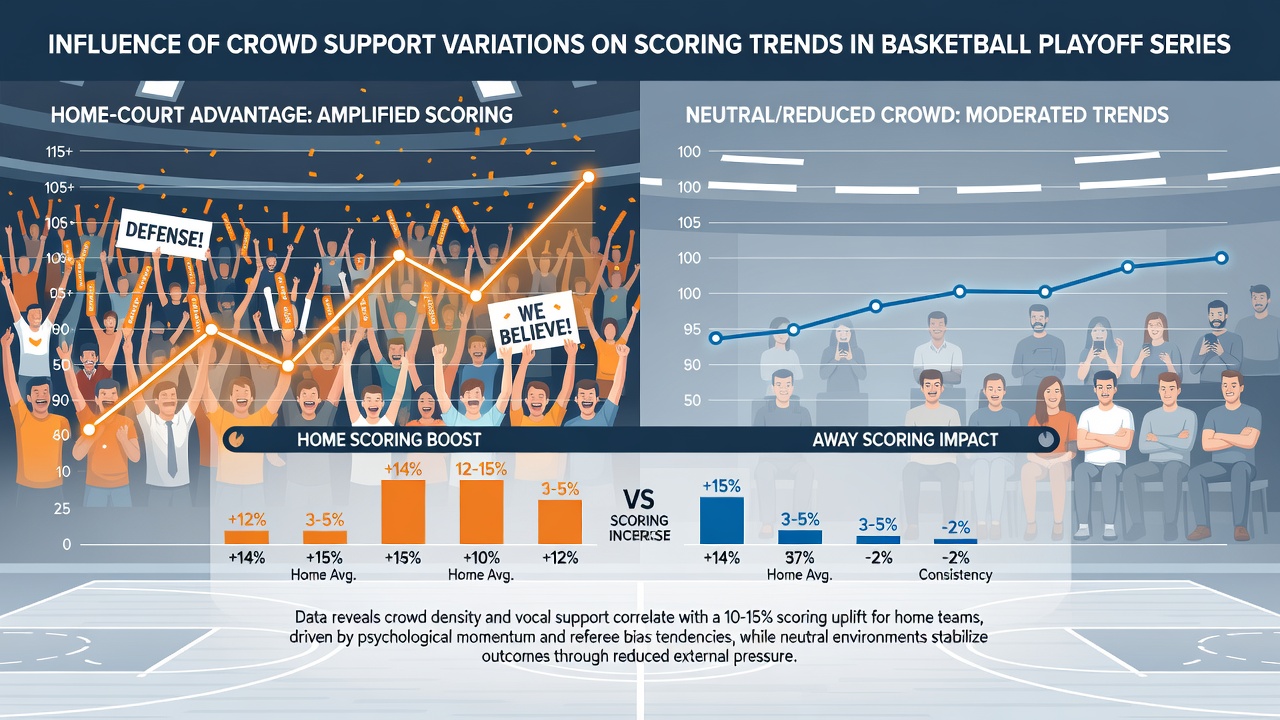
Data from multiple NBA playoff seasons shows that home teams average between 4 and 7 additional points per game compared with road teams, and researchers have tied part of this margin to variations in crowd support. Studies tracking arena attendance figures alongside box scores reveal that series played in front of capacity crowds often produce elevated scoring outputs for the home side, particularly in the first and third quarters where transition opportunities increase under sustained noise pressure. League records indicate that when attendance drops below 85 percent of capacity, the home scoring advantage narrows by roughly two points on average, suggesting crowd density contributes measurable influence beyond travel fatigue alone. Analysts examining playoff data across the last decade have noted distinct patterns when comparing venues with differing acoustic environments. Arenas known for high decibel levels during postseason games correlate with reduced three-point attempt rates for visiting teams, as ball handlers face more frequent defensive disruptions. Figures released by the NBA's analytics division highlight that road teams shoot approximately 1.8 percent lower from beyond the arc in the loudest buildings, while home teams maintain or slightly increase their efficiency in the same conditions.Attendance Levels and Scoring Output Patterns
Playoff series data compiled since 2015 demonstrates that games with attendance exceeding 19,000 spectators produce higher total points per contest than those below 15,000, even when controlling for team strength. The difference appears most pronounced in opening games of each round, where crowd energy peaks before familiarity sets in across multiple matchups. Researchers at the University of Michigan's sports science program documented these trends through regression models that isolate crowd size as an independent variable, finding statistically significant links to increased assists and reduced turnovers for the home roster.
Variations also surface when comparing Eastern and Western Conference venues, where architectural differences affect sound distribution and sightlines. Buildings with steeper seating tiers tend to amplify crowd noise closer to the court, and visiting players in those environments record modestly lower free-throw percentages according to aggregated play-by-play logs. The effect compounds over a seven-game series, as fatigue from constant auditory pressure accumulates for road squads.
Noise Intensity and Defensive Efficiency Shifts
Acoustic measurements taken during postseason contests indicate that crowd noise above 105 decibels coincides with elevated defensive rebounding percentages for the home team. Communication breakdowns on offense become more frequent under these conditions, leading to rushed shots and lower effective field-goal percentages for visitors. Data compiled by independent tracking firms shows that teams facing the highest noise thresholds commit 0.9 more turnovers per 100 possessions than in quieter playoff settings.
Coaching adjustments observed in film study sessions often involve simplified play calls designed to reduce verbal reliance when noise levels spike. These adaptations sometimes preserve scoring margins but rarely eliminate the underlying home advantage entirely. League-wide statistics reveal that series decided in arenas with variable attendance across games exhibit wider scoring fluctuations than those held in consistently full venues, pointing to crowd consistency as another modulating factor.
Comparative Analysis Across Different Playoff Rounds
First-round series display larger crowd-driven scoring differentials than later rounds, partly because early matchups often feature newer arenas or recently relocated franchises that generate heightened local interest. Conference finals and championship rounds, by contrast, occur in more established markets where crowd behavior has stabilized over multiple appearances. Records maintained by Basketball Reference indicate that home teams in Game 7 situations convert roughly 3 percent more shots at the rim when playing before sellout crowds compared with lower-attendance Game 7s.
International comparisons add further context, as FIBA tournament data from events held outside North America show similar but smaller home scoring edges when crowd sizes vary. European leagues with stricter capacity limits during certain playoff stages report attenuated effects, underscoring how absolute spectator numbers interact with cultural and structural variables to shape outcomes.
Conclusion
Comprehensive review of available statistics confirms that crowd support variations exert measurable influence on scoring trends throughout basketball playoff series, operating through multiple channels including noise intensity, attendance density, and venue acoustics. The patterns hold across seasons and conferences even as other factors such as rest and travel remain constant in controlled analyses. Ongoing collection of granular data continues to refine understanding of these dynamics for future postseason cycles.